

Van Gogh & Vincent

The Life of Vincent van Gogh — An Immersive Journey in 32 Rooms

The Real Vincent

Everyone knows Van Gogh. The Sunflowers. The Starry Night. The severed ear. But who was Vincent van Gogh, really?

Before he ever touched a paintbrush, he spent years searching for his purpose — first as an art dealer in the galleries of The Hague, London and Paris, then as a preacher in the coal mines of Belgium. He only began painting at the age of 27. In just ten years, he created over 2,000 artworks, sold almost nothing during his lifetime, and wrote 840 letters to his brother Theo that are among the most extraordinary documents in art history.

This exhibition tells that complete story. Not through projections or screens, but through the physical places where Vincent lived, loved, suffered, and created. 32 rooms, each one a chapter. Curated with scientific precision by Dr Wouter van der Veen, a leading Van Gogh scholar.

Alongside the immersive journey, you'll encounter 9 Museum Editions — masterpiece reproductions created by the Van Gogh Museum (Amsterdam) and Fujifilm, replicating the originals to the micron in size, colour, and brushstroke texture.
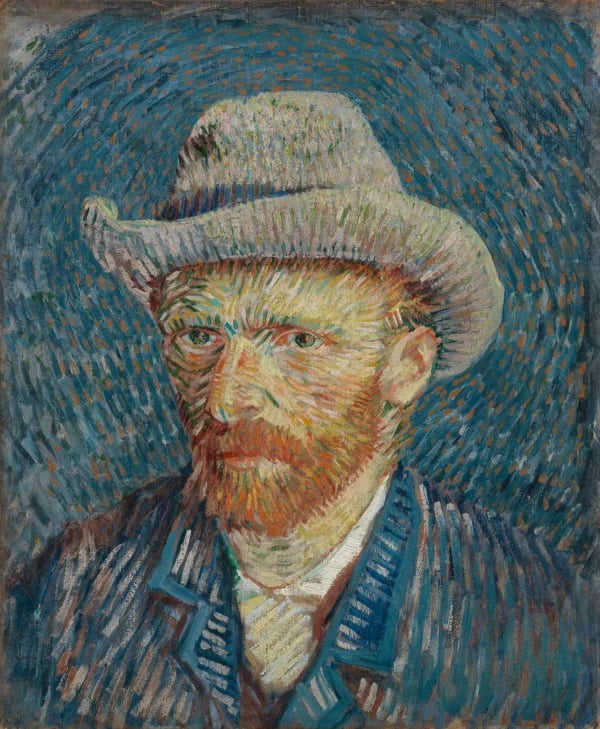
Van Gogh & Vincent — The Exhibition
11853–1869Rooms 1–6

Zundert: Where Vincent's Story Begins
Vincent Willem van Gogh was born on 30 March 1853 in Groot-Zundert, a small village in the Dutch province of North Brabant. His father, Theodorus, was a Calvinist pastor. His world was one of duty, scripture, and the vast, flat landscape of the Brabant countryside. In this opening sequence, you'll step into the family parlour, the attic bedroom Vincent shared with his younger brother Theo, and the modest church where his father preached. You'll sense the quietness — and the weight — of Vincent van Gogh's early years.
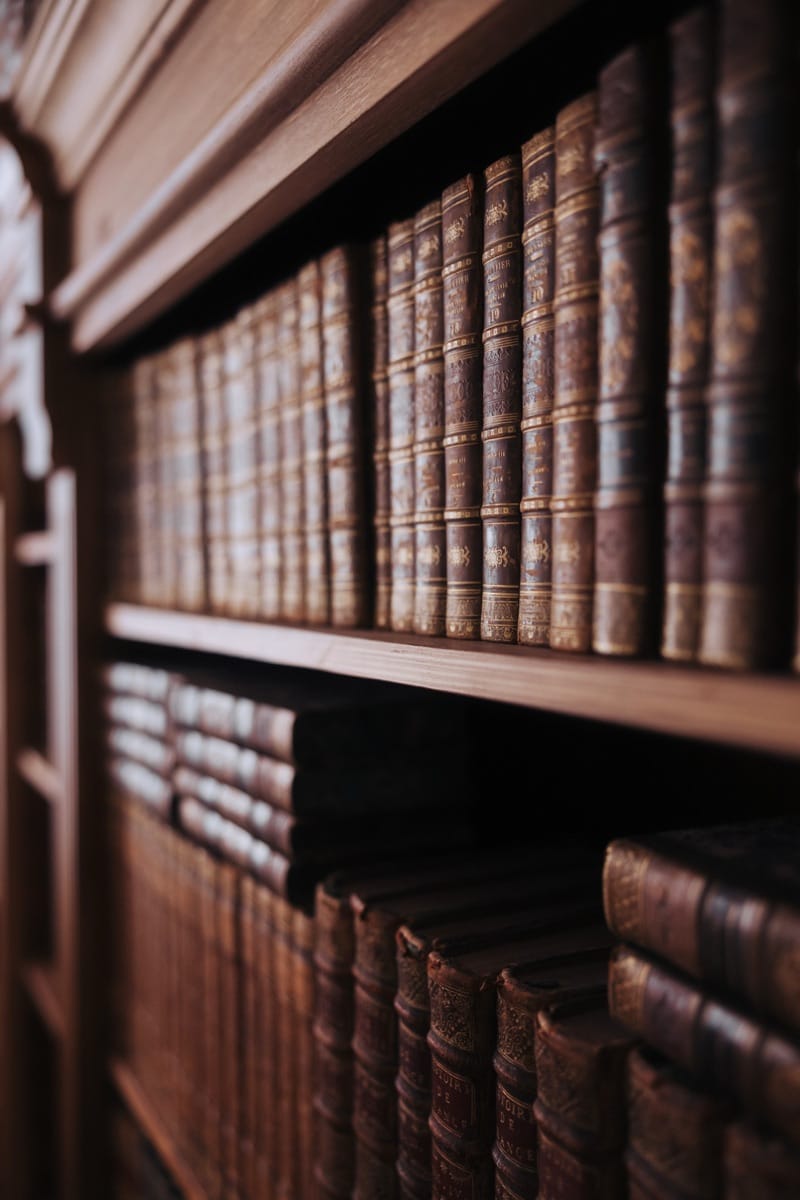
Leather-bound book spines from a 19th-century reading room — the world of letters and pictures that surrounded Vincent's childhood
21869–1876Rooms 7–9

The Hague, London, Paris: Van Gogh and the Art Business

At sixteen, Vincent joined Goupil & Cie — the world's leading art dealership, with galleries in The Hague, London, and Paris. It was a family affair: his uncle was a partner. Vincent proved himself a passionate, tireless employee, developing an encyclopaedic knowledge of European painting — from Corot and Daubigny to Millet and the old Dutch masters. But commerce alone could not satisfy him. A growing religious fervour was pulling him towards something deeper. Here you'll walk through a recreation of a 19th-century art gallery, surrounded by the very prints that shaped Van Gogh's visual imagination years before he ever picked up a brush.
31876–1880Rooms 10–12

The Borinage: Van Gogh the Preacher

Vincent left the art trade to pursue a religious calling. He spent a full year in Amsterdam studying Latin, Greek, and the Scriptures, only to realise he was not suited for academic study. He then took a position as a lay evangelist in the coal mines of Belgium's Borinage region. There, he gave away his clothes and belongings, and descended into the mine shaft with the workers — 700 metres below the surface. This is the darkest chapter of the exhibition — and of Van Gogh's life. The descent into the mine is both literal and metaphorical: a journey into despair that would ultimately lead to his artistic awakening. When Vincent emerged from the Borinage, he was no longer a preacher. He had begun to draw.
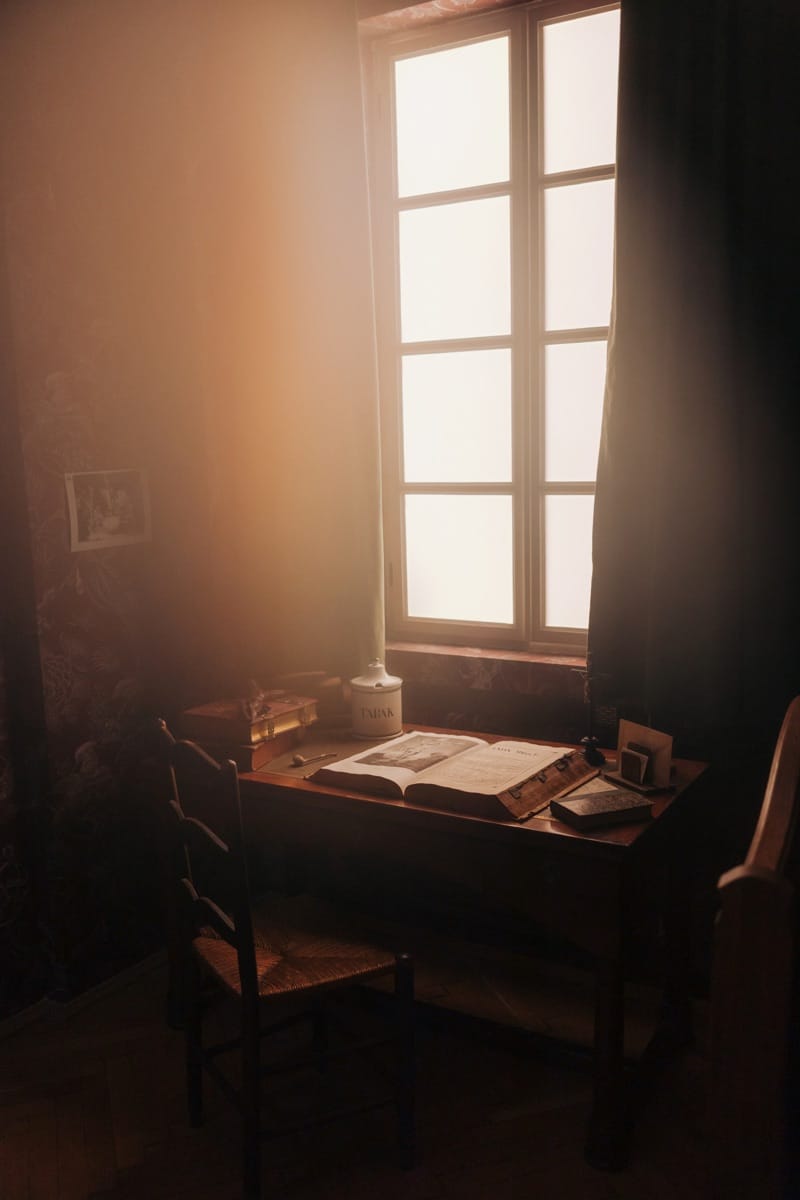
Window light falling on a writing desk with an open book, recalling the Borinage period
41880–1885Rooms 13–16

The Hague & Nuenen: Van Gogh Becomes a Painter
In The Hague, Vincent lived with Sien Hoornik — a pregnant woman he tried to rescue from the streets. He set up his first real studio, taught himself perspective, and designed his own tools. Then, returning to his parents' village of Nuenen, he painted what he considered his first true masterpiece: The Potato Eaters (1885). In these rooms, you'll see his handmade perspective frame, his paint-stained worktable, and the modest space where Van Gogh's artistic vision began to take shape. The palette is dark, earthy, raw — nothing like the explosion of colour that was still to come.
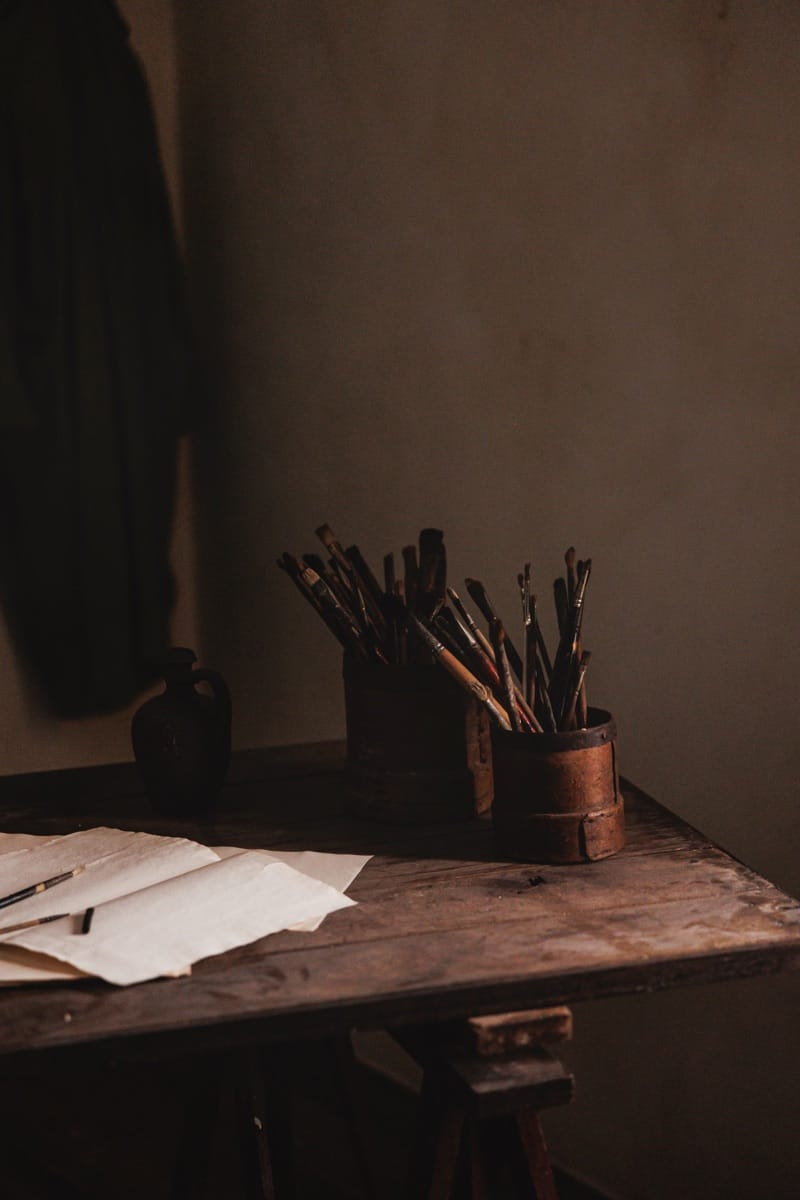
Painter's brushes and paper sheets on a wooden table in Vincent's first studio recreation
51886–1888Rooms 17–22

Paris 1886–1888: The Birth of a New Palette
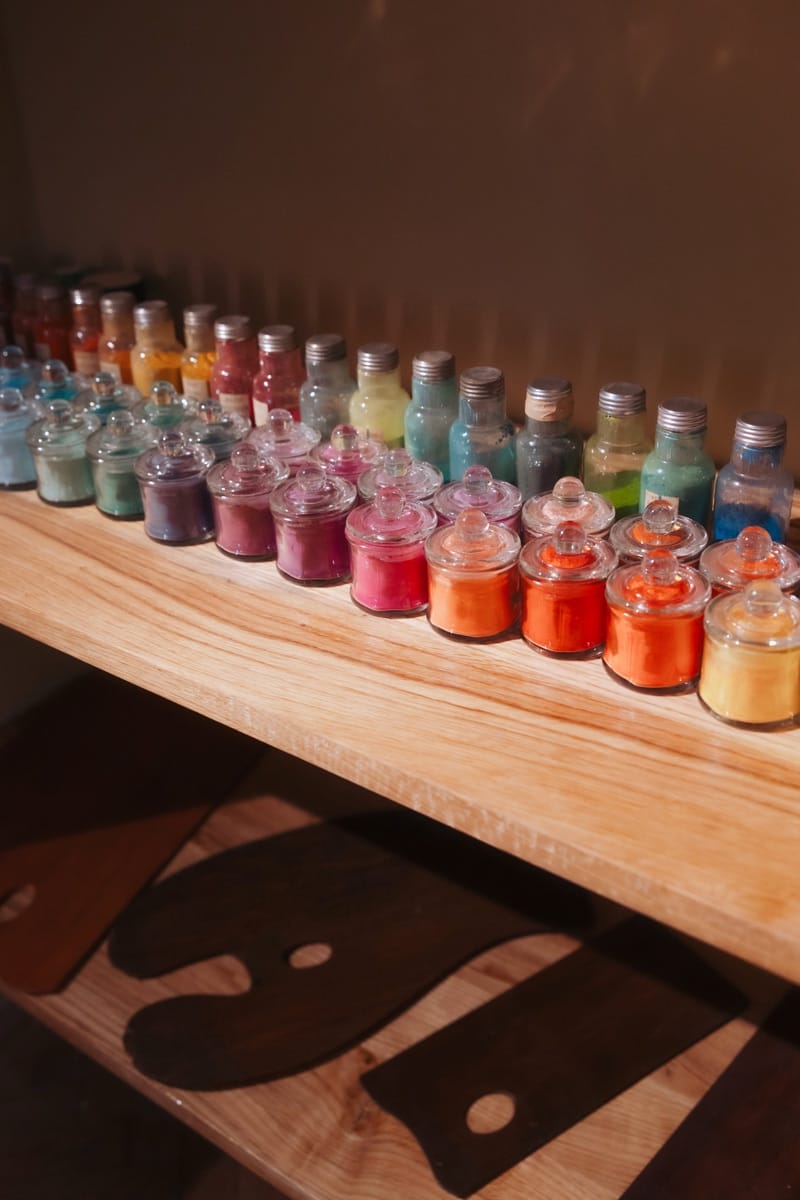
Paris changed everything. Living with Theo in Montmartre, Vincent discovered Japanese woodblock prints, met Toulouse-Lautrec, Gauguin, and Signac, studied at Atelier Cormon, and completely reinvented his style. The dark palette of Nuenen gave way to the vivid, expressive colour that would define Van Gogh's distinctive style. He painted dozens of self-portraits and dozens of flower still lifes. He drank too much absinthe. He argued passionately about art in the cafés of Montmartre. These rooms capture the energy, the colour, and the excess of Van Gogh's Parisian years — from the intimate studio to the smoky aftermath of a night that went too far.
Row of period pigment jars displayed in the exhibition — the colours Vincent discovered in Paris
61888–1890Rooms 23–30

Arles & Saint-Rémy: Masterpieces and Madness
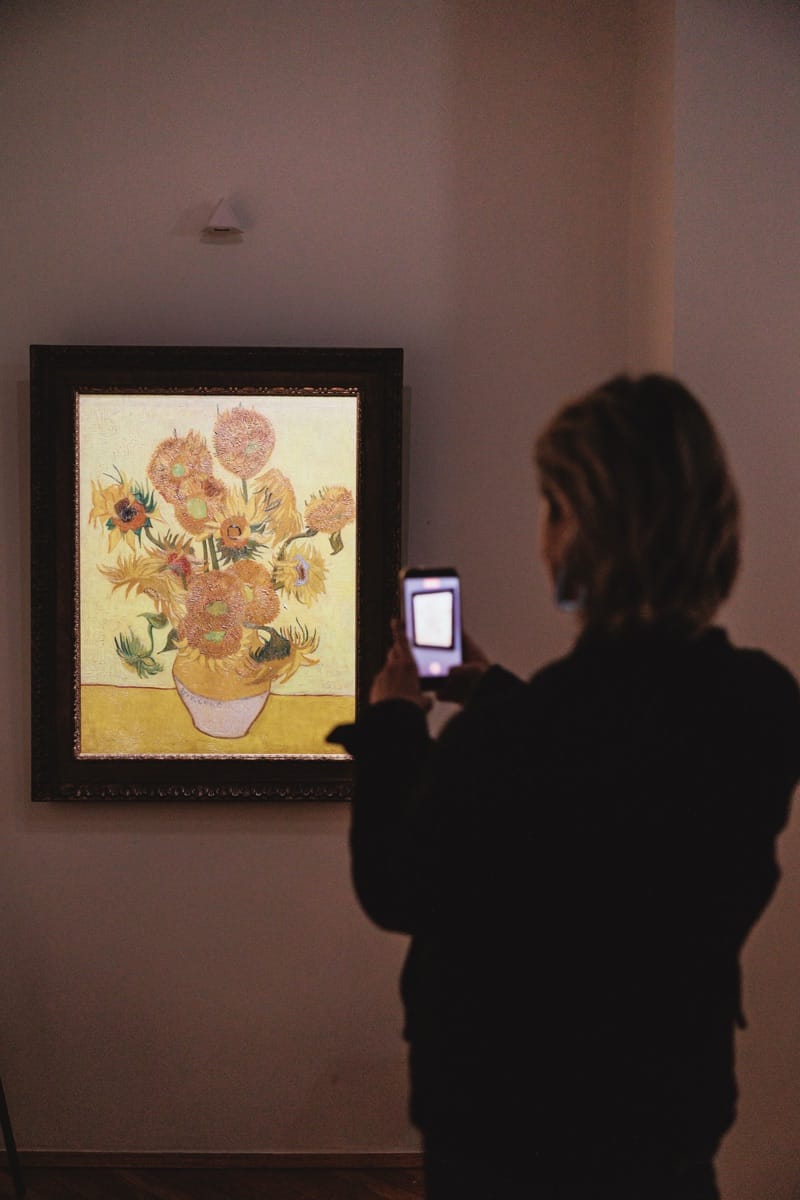
Arles. The Yellow House. The Sunflowers. The Bedroom. Van Gogh's Starry Night. These are the paintings that made Vincent van Gogh immortal — all created in just two years in the south of France. But behind the masterpieces lay a man unravelling. The explosive confrontation with Gauguin. The severed ear. The hospital in Arles. The voluntary admission to the asylum at Saint-Rémy-de-Provence, where Van Gogh continued to paint extraordinary works even as his illness deepened. In these rooms, you'll feel the unbearable tension between creation and collapse — between the most productive period in art history and the fragile mind that produced it.
A visitor photographing the Sunflowers Museum Edition reproduction in the Arles room
71890Rooms 31–32

Auvers-sur-Oise: 70 Days, 74 Paintings

The final chapter. In the summer of 1890, Vincent arrived in Auvers-sur-Oise, a quiet village north of Paris, under the care of Dr. Paul Gachet. What followed was the most extraordinary burst of creativity in art history: 74 paintings in just 70 days. He painted the church, the wheat fields, the village streets. He created elaborate drawings and wrote letters to Theo filled with a strange mix of hope, resilience and resignation. Then came the wheat field with crows, the walk along the tree roots — and the end, on 29 July 1890. But Van Gogh's story doesn't end with his death. It was Johanna van Gogh-Bonger, Theo's widow, who dedicated her life to turning a pile of unsold canvases into one of the most celebrated legacies in the history of art. Without Johanna, there would be no Van Gogh as we know him.

You've read the story. Now walk through it. 32 rooms, one extraordinary life.

Book your tickets to Van Gogh & Vincent in Kraków
Buy Tickets